




















Artificial intelligence has become part of education today, whether we like it or not. Students use it the same way people use calculators, spell-check, or even Google, which is to get ideas, fix sentences, or figure out something that we are confused about.
In a lot of college classrooms, the reaction to AI has gone from curiosity to straight-up panic.
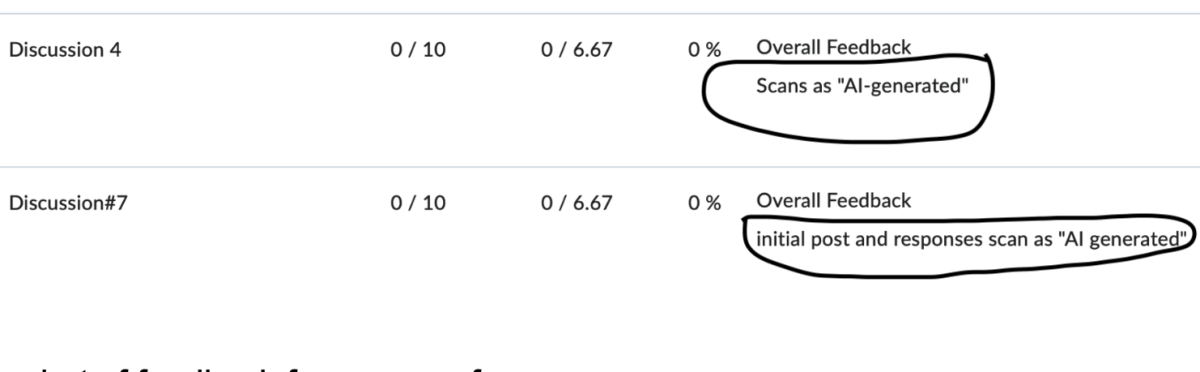
For example, I turned in an assignment I wrote myself, only to have my professor tell me she thought I used AI. I remember staring at my failing grades in complete confusion. I emailed her and asked her to explain what part seemed “AI-generated,” but weeks went by with no response. My grade is still sitting at a zero for something I actually wrote.
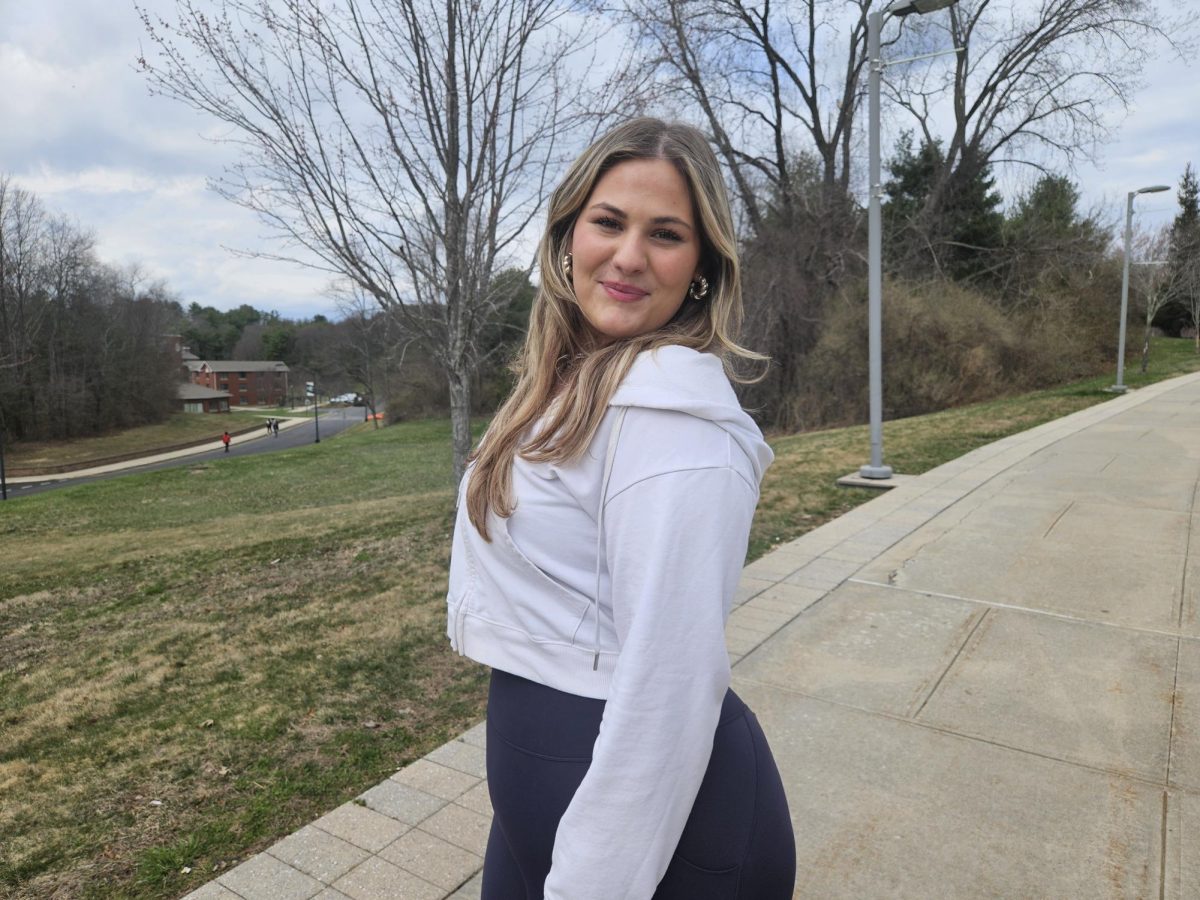
Another student, Caroline Brucato, told me she went through almost the exact same thing.
“I worked so hard on that paper,” Brucato said. “When my professor said it looked like AI, I honestly felt sick. I didn’t even know how to defend myself. She told me it was 53% likely written by AI and ‘most likely not written by a human. I just sat there thinking, how am I supposed to argue with a percentage on a screen?”
And a screenshot, Brucato said, was the only evidence the professor provided.
“My professor showed me a screenshot like it was solid proof of something I didn’t do,” Brucato said. “I felt guilty before I even opened my mouth.”
Something more is being shown within these experiences: The real issue isn’t AI, it’s how schools are reacting to it.
Some professors say students can use AI responsibly, but few agree on what that actually means. Is brainstorming allowed? Is grammar checking allowed? Can you use it to help rewrite a rough paragraph? Every professor has their own rules, and students are sometimes supposed to magically know all of them. All these questions just lead us to be confused.
On top of that, AI-detection tools are becoming the new lie detector tests — even though research keeps proving they’re unreliable.
A 2023 study published in Springer Nature Link found that detectors mislabeled writing as AI 61% of the time, even when it was completely human-written. Another review basically said accurate detection might be “impossible.”
Being accused of using AI isn’t just annoying. It changes how you write. When it happened to me, I started wondering, am I supposed to just write worse? Should I avoid certain words? Do professors think anything that sounds “smart” has to be AI?
Brucato said the same thing.
“I kept second-guessing everything,” she said, “I didn’t want my sentences to sound ‘too good,’ because what if they accused me again?”
A 2023 peer-reviewed study published in Science Direct found that both human reviewers and AI detectors wrongly labeled real, human-written papers as AI-generated. So the technology we’re being judged by isn’t even stable.
If colleges actually want to handle this new reality, a few things need to change. Teachers could try setting clear rules, talking to students before accusing them, normalizing AI as a tool rather than something evil, and paying attention to the writing process like drafts, peer reviews and reflections that encourage growth.
What would have been helpful to me would have been a simple conversation or honestly, just a reply. I reached out to my professor asking for more information, anything that could explain why my real work was labeled as AI. It’s been a full month, and I still haven’t heard a single word back.
If colleges want students to use AI responsibly, communicate honestly, and trust the learning process, then students and educators must work together. Accountability can’t be one-sided. Until that changes, AI isn’t the real issue. How we respond to it is.

Milo • Dec 27, 2025 at 3:29 PM
I’ve heard of this phenomenon and other students experiencing this. I don’t think us students should ever worry about a sentence sounding “too good”. It creates a hesitancy and second guessing with writing that can become an obstacle to developing one’s own style and voice. I view sentences written by AI to be too clinical, so it’s interesting to hear some people avoid sounding good in papers thinking they’ll be compared to AI. I think it’s so important for colleges to change how they handle these situations in relation to the development of AI. AI is a real problem for academia and changes almost every aspect of it, while people profit off the destruction of it. This article was very insightful!