








After nearly two decades at SUNY Old Westbury, John Friedman, an associate professor in the American Studies Department, is preparing to reflect on a career that spans journalism, documentary filmmaking and teaching.
Friedman will be honored at a special event on Tues., April 7, where colleagues and students are invited to help celebrate his career and contributions to the university.
His career is one defined as much by professional achievement as by a deep commitment to students.
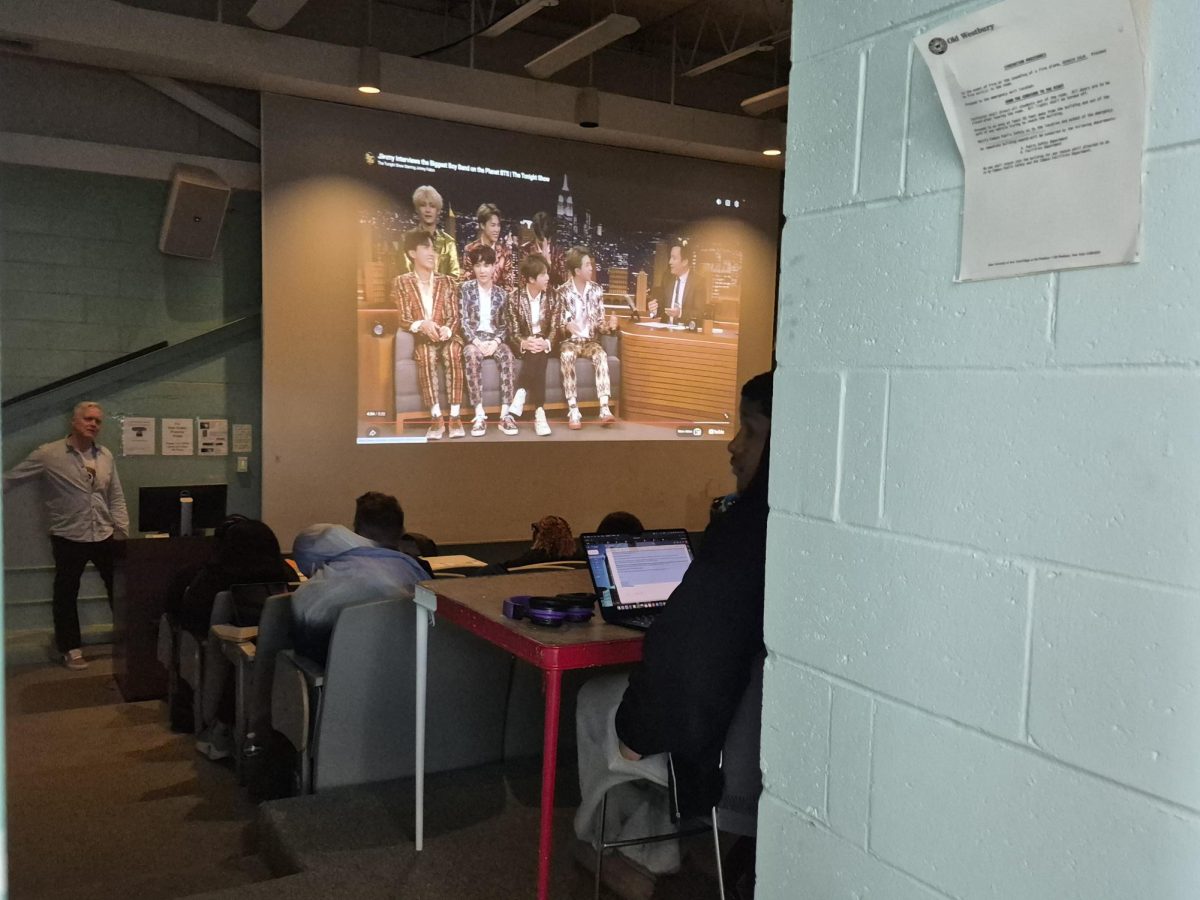
Friedman, who has taught at SUNY Old Westbury for more than 19 years and served as faculty advisor to The Catalyst for much of that time, has witnessed significant changes on campus. While the institution’s core mission of social justice has remained steady, he says the classroom itself has been transformed by technology.
“When I began, the internet really was not used that much,” Friedman said. “Now, with cell phones and artificial intelligence, it’s changed what it means to be a professor.”
He points to distractions in the classroom and the rise of AI-generated work as growing challenges.
“If a student presses a button and a paper comes from a machine, how can anyone learn that way,” he said. “They’re not doing the thinking or the imagination required.”
Despite these shifts, Friedman’s approach to teaching has remained rooted in engagement and dialogue. He describes his method as an “organic theory of teaching,” where discussions often move beyond the syllabus to explore broader cultural and ethical questions.
In addition to teaching, Friedman has built an extensive career as both a journalist and filmmaker. He worked as a war correspondent and a Washington correspondent for The Baltimore Sun and has written for outlets including The New York Times and The Nation magazine.
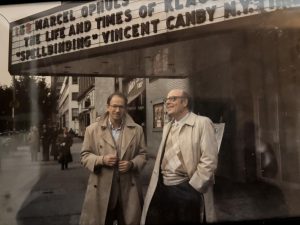
His documentary work includes producing “Hotel Terminus: The Life and Times of Klaus Barbie,” which won the Academy Award for Best Documentary Feature, as well as later projects such as “Stealing the Fire” and the recent PBS documentary “Plunderer: The Life and Times of a Nazi Art Thief.”
Rather than seeing his professional success separate from teaching, Friedman believes the two are closely connected.
“My filmmaking and journalism add to the classroom,” he said. “I can bring different perspectives, and it shows students that you can combine different careers.”
At the heart of his teaching philosophy is the idea that education should go beyond job preparation. While he acknowledges that many students are focused on career outcomes, he encourages them to explore a broader range of interests.
“The ultimate purpose of an education is to understand your own abilities and interests,” Friedman said. “It’s about fulfilling yourself.”
That philosophy shapes what he hopes students carry with them after leaving his classroom, not just knowledge, but awareness, ethics and a deeper understanding of themselves and others.
“I hope they learn about values and the choices they’re going to have to make,” he said. “And that they become more aware of themselves, of their environment, and of the world.”
Still, Friedman acknowledges that a long career brings challenges and frustrations. In journalism, he struggled with the limits of objectivity and the expectation to present “both sides,” even in the face of clear injustice. In filmmaking, the biggest obstacles have been time and funding, with documentary projects often delayed or constrained by limited resources.
In the classroom, his frustration is more personal.
“I can’t reach every student,” he said. “Some are engaged and want to learn, but others are withdrawn, they’re on their phones, they don’t participate. A teacher can only do so much. At some point, it has to come from the student.”
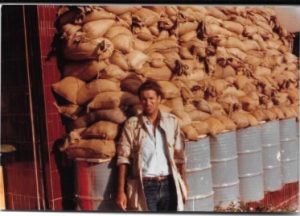
Reflecting on his career, Friedman says one of the hardest lessons he has learned is that life itself is inherently difficult.
“There are always going to be problems and obstacles,” he said. “The challenge is how we navigate them and how we help other people along the way.”
Looking ahead, Friedman is not slowing down. He hopes to continue making documentaries, writing, and possibly return to teaching in a limited capacity.
“The main thing is to make more films,” he said.
As he considers how he will be remembered at SUNY Old Westbury, Friedman’s answer returns to the classroom.
“I’d like to be remembered as someone who cared about his students,” he said. “If I’ve helped them, expanded their horizons, or had a positive effect on their lives, that’s more important than anything.”
For Friedman, a career marked by awards and publications ultimately comes down to impact, not just on audiences, but on the students he has taught along the way.
John Friedman — a celebration of his career. Tues, April 7 from 1 p.m. to 3:30 p.m., NAB 1100. Light refreshments. Free admission.
GMoney • Apr 3, 2026 at 10:35 AM
Great professor! I had him from 2019-2020, but unfortunately the pandemic was scary and I did not get to witness him at his full potential. I wish him nothing but the best!