











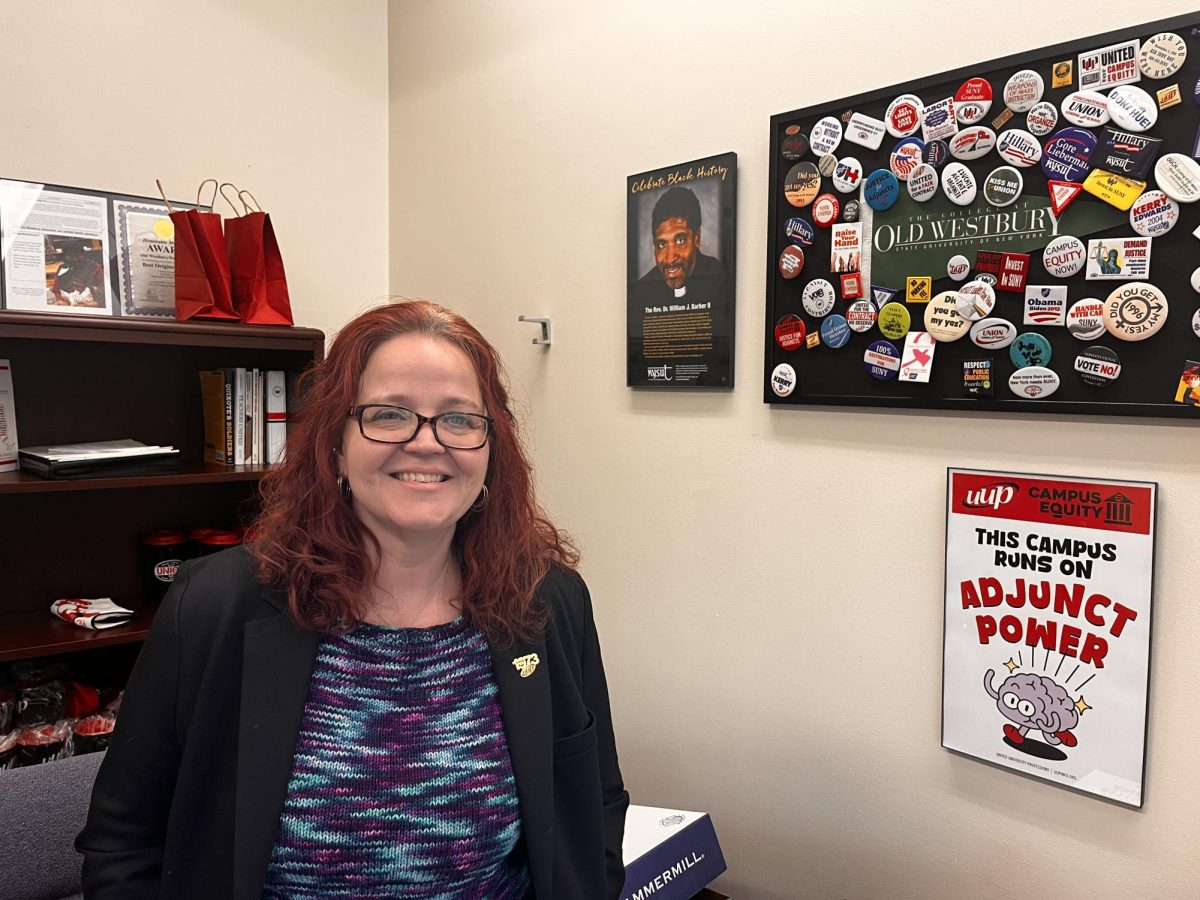

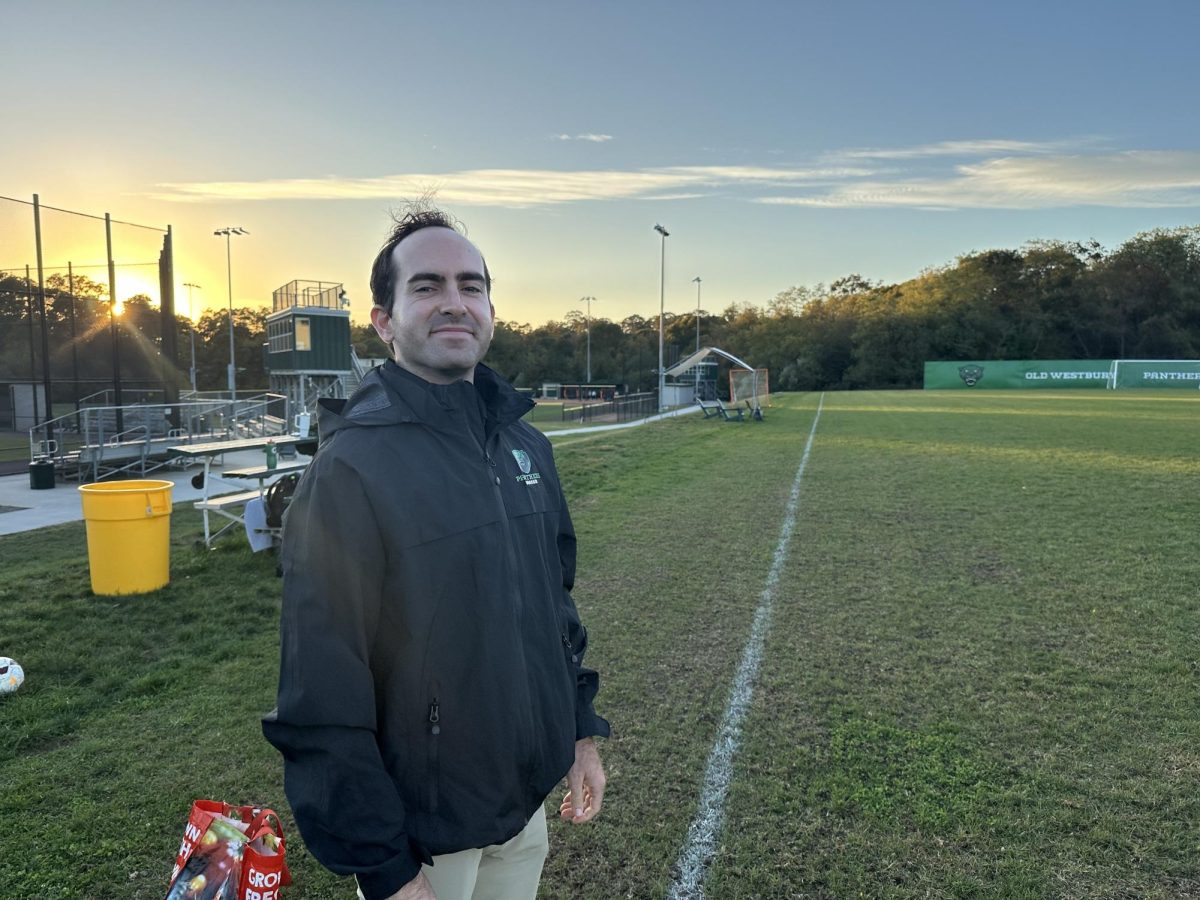













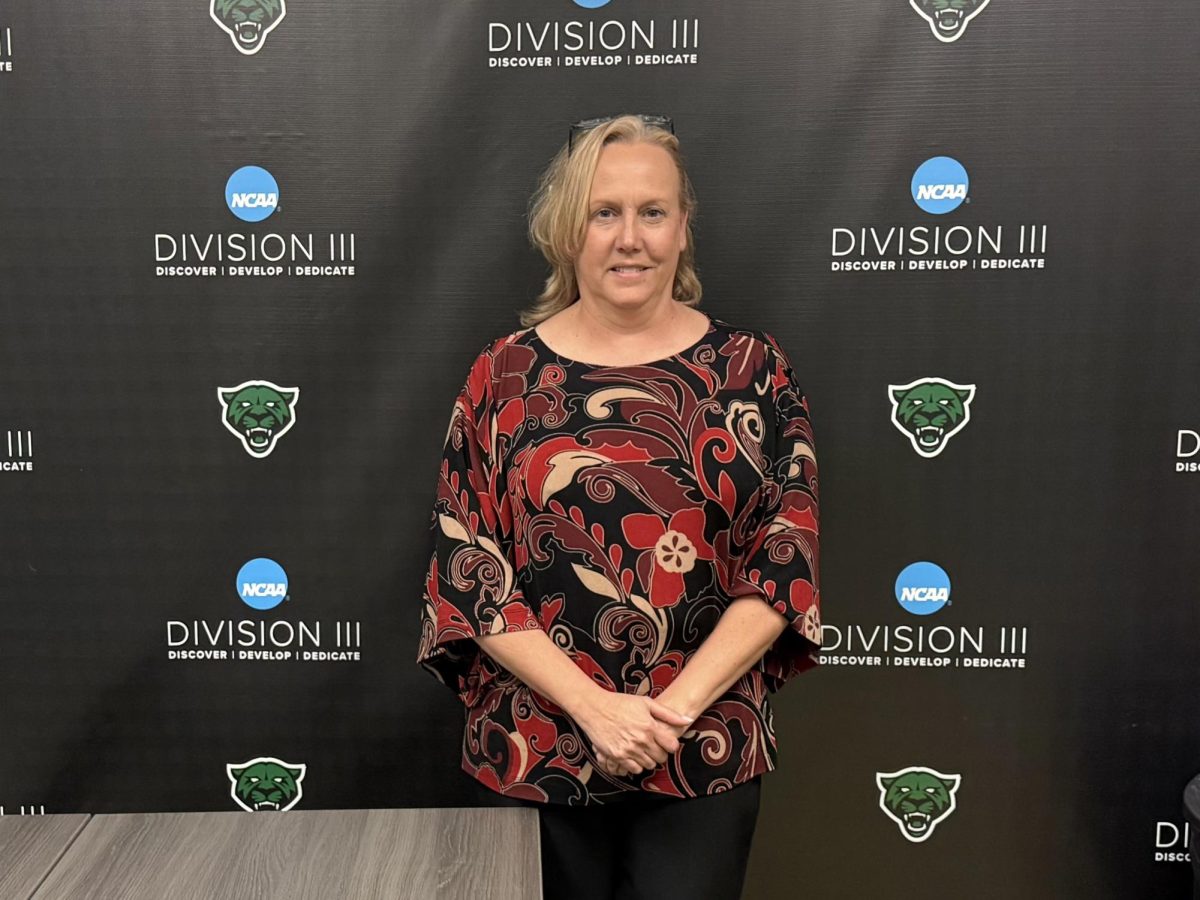
Since 2012, Lenore Walsh has led athletics at SUNY Old Westbury with a clear philosophy that the student athlete experience comes first. As director of athletics, Walsh oversees a department that balances competition, academics, and personal growth — three priorities she sees not as separate goals but as one unified identity.
“To me, it’s all one thing, being a student athlete,” Walsh said.
For Walsh, the most rewarding part of her journey isn’t measured in championship banners, but in commencement caps. She lights up when talking about graduation day, about watching student athletes cross the stage with degrees in hand, knowing they also spent four years playing the sports they love.
“I love commencement,” she said. “It’s bittersweet. Some of these students have been here for four years, sometimes two. I’ve had transfers tell me they wish they had come here all four years. When you hear that, that’s the most rewarding experience.”
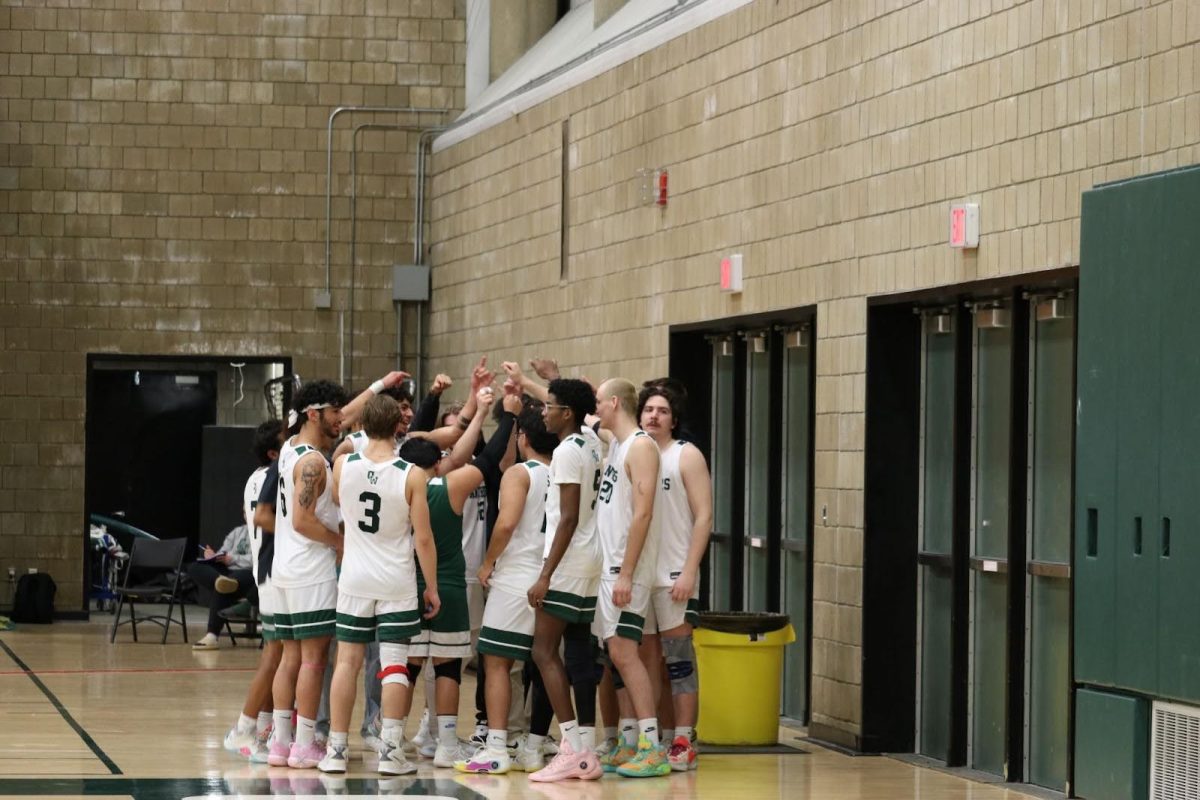
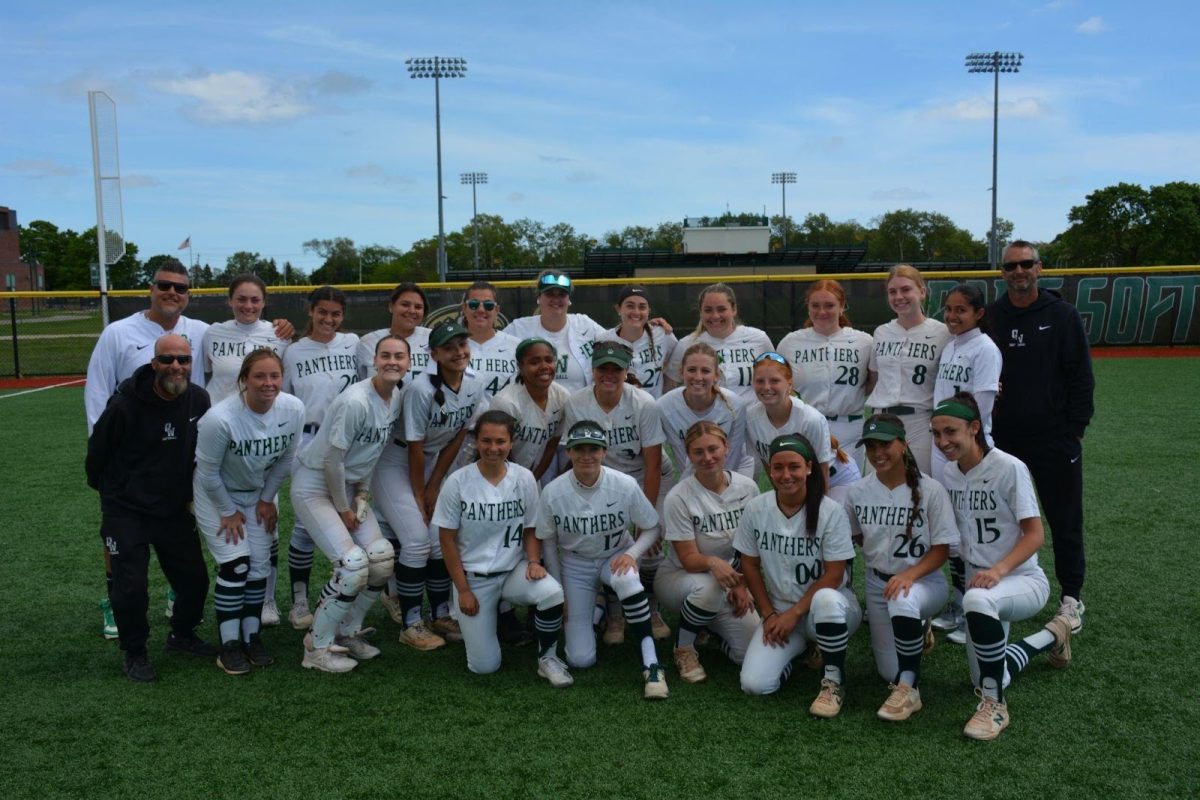
At SUNY Old Westbury, Walsh takes pride in offering something she believes is rare in today’s college sports landscape: flexibility. Unlike Division I or II programs where athletes often feel locked into a single sport, athletes at SUNY Old Westbury sometimes compete in multiple sports across seasons, like soccer players joining lacrosse or basketball players trying flag football. For Walsh, that freedom reflects a fuller, healthier student athlete experience.
“Are you really getting your full student athlete experience at those larger athletic programs?” she said. “Here, they’re able to enjoy themselves, smile and still get their education.”
A former student athlete herself, Walsh understands the pressures firsthand. She remembers juggling practices, games, schoolwork and sometimes jobs. That lived experience shapes how she mentors athletes today. Her advice is simple but powerful: “Do one thing a day.”
When student athletes feel overwhelmed, Walsh encourages them to focus on checking off a single task rather than staring at a list of ten.
“When you check off one thing, it’s not on your to do list tomorrow,” she explained. “It makes you feel good about yourself. And you keep moving.”
The lessons learned on the field, like time management, quick decision making and teamwork, translate directly to life beyond college. Walsh describes it as “locker room to board room.” The same instincts used to scan a field for a teammate are the ones used to manage a department or solve an emergency.
And emergencies are part of the job.
While athletics may look like “sunshine and rainbows” from the outside, Walsh says. the reality is closer to running a business. On some days, she’s navigating budgets, human resources, contracts, facilities issues, and capital projects. A burst pipe, a blocked road affecting operations, a last minute staffing gap, nothing is ever truly quiet.
During the COVID-19 pandemic, that reality intensified. Staff turnover left the department short handed. Walsh found herself jumping in wherever needed, helping with game statistics, supporting operations, doing whatever it took to preserve the student athlete experience.
“Sometimes you just have to jump in to make it happen,” she said. “We got through it because it was important to maintain that experience.”
Walsh’s leadership is guided by honesty, even when conversations are difficult. She admits disciplining student athletes is her least favorite part of the job. But she views it as a teaching moment, reminding them they represent not just themselves, but the institution.
“You’re ambassadors to this institution,” she tells them. “You’re representing Old Westbury.”
The same candor applies to coaches. Recruiting is essential in college athletics, which is enrollment driven, and Walsh makes clear that building and sustaining programs requires consistent effort.
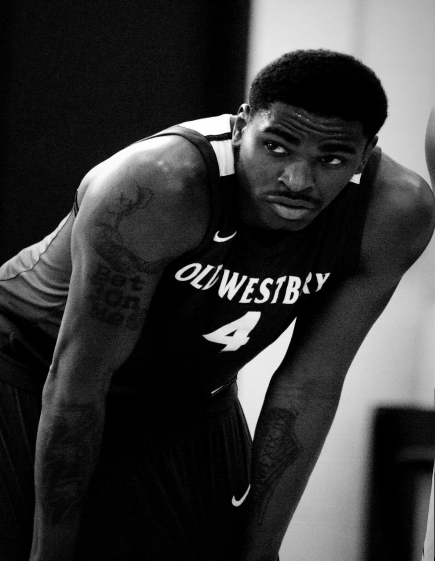
Still, she is proud of what her department has built. Under her leadership, initiatives like the PAWS, Panther Academics Will Succeed, support struggling but eligible athletes to keep them on track academically. The Athletic Director’s Honor Roll recognizes high achievers, contributing to a department wide GPA above 3.0. She actively promotes NCAA professional development programs, recently sending a men’s basketball player to the NCAA Convention to explore the business side of athletics.
That commitment to growth extends beyond her own campus. One of the biggest changes Walsh has seen in college athletics is the rise of women in leadership. When she first joined the Skyline Conference, she was one of only two female athletic directors. Today, the majority are women, and the conference also has a female commissioner.
“It’s really great to see that glass ceiling breaking,” she said.
At the same time, Walsh acknowledges the evolving landscape of college sports, from the transfer portal to Name, Image, and Likeness, NIL, policies. While these changes create opportunities for athletes, they also introduce new challenges around loyalty, recruiting and stability.
Looking ahead, Walsh’s vision is ambitious. She hopes to see a turf facility installed at SUNY Old Westbury, a move she believes would transform the department. With turf and improved facilities, the college could potentially add programs like men’s lacrosse, field hockey, or even track and field.
“We want to keep up with other SUNY schools and be competitive,” she said. “We’re always striving to be better.”
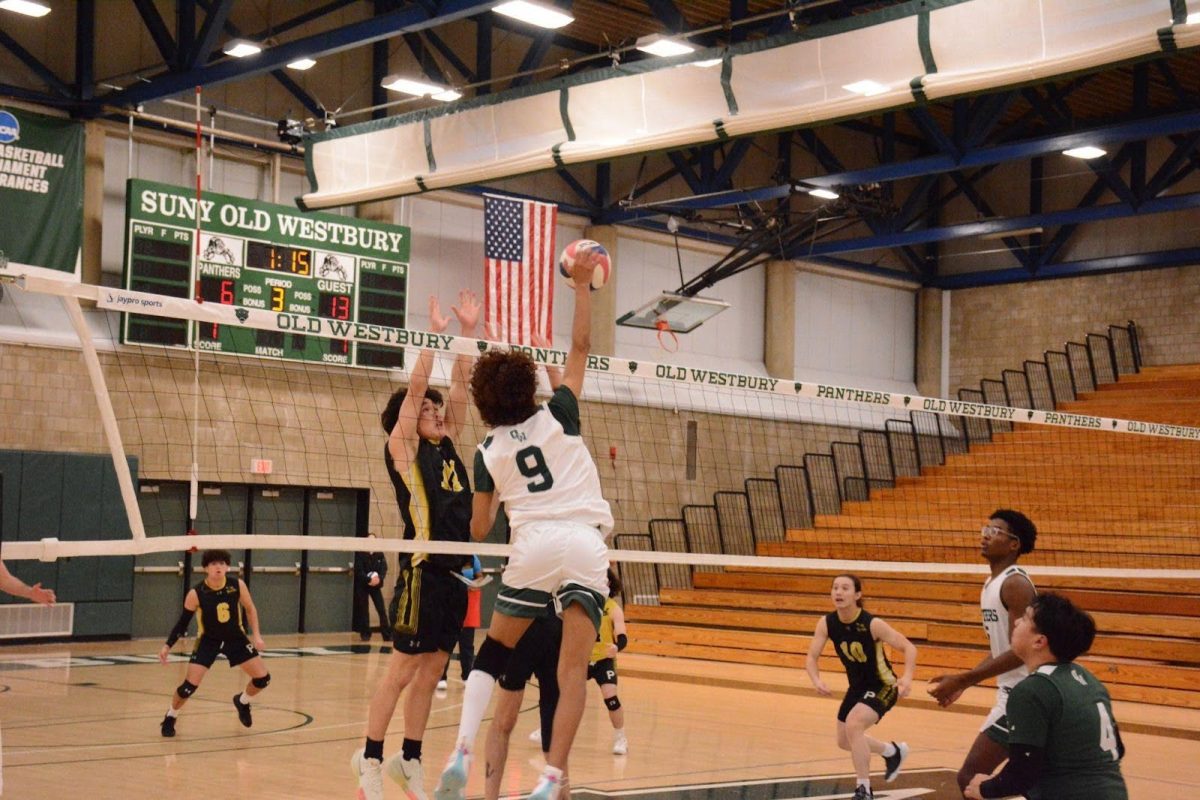
Even without identical budgets or resources as other institutions, Walsh remains focused on growth. Men’s volleyball has already been added, and flag football will soon transition from a club sport to an NCAA program.
Through it all, her philosophy remains steady, academics, athletics and development, three prongs, equal in importance. She wants every student-athlete who leaves Old Westbury to say they graduated, improved in their sport, and grew as a person.
