











It was supposed to be a simple night out.
A SUNY Old Westbury student and her friends had gone into the city to eat dinner in Chinatown. They laughed, shared food and talked about school.
But when they walked out of the restaurant, flashing lights filled the street. ICE agents were moving quickly, stopping people and leading several away in handcuffs. What was a normal city street just hours before suddenly resembled a scene from a dystopian nightmare.
“Every siren makes my heart race,” said one undocumented SUNY Old Westbury senior who witnessed the aftermath of the unsettling scene. The student asked not to be named out of fear for their personal safety. “It’s hard to focus on the class when you’re scared your family might not be at the house when you get back,” they said.
Across the country, civil unrest has intensified. In June 2025, protests erupted after federal authorities launched a new wave of ICE raids that included National Guard and Marine deployments in multiple cities.
“I look at the news, like, what the hell, you know?” said the SUNY Old Westbury student. “The people in the streets are no different than me. Like, what if I was there? What if it was me?”
More recently, New York City’s Chinatown became the site of public protest following ICE deployment in New York City. Protestors chanted throughout the streets following the arrest of nine people who the Department of Homeland Security alleged were in the US illegally.
The tension surrounding these events extends beyond the confines of city streets. On the campus of SUNY Old Westbury, the national debate over enforcement and rights is resonating among students returning to a new academic year under a climate of uncertainty. Here, these lessons are unfolding not just in textbooks but in real time.
The Politics, Economics & Law program, also known as PEL,“introduces students to the disciplines of political science, political economy, and economics … how these different areas intersect to shape U.S. and international law, institutions, and policies,” according to the SUNY Old Westbury website.
That mission took on a more profound meaning this fall as students witness those same systems under public scrutiny.
Students in the program are now examining how government decisions ripple through communities like their own. They are questioning what it means to feel protected or targeted by the same institutions they study. For some, the classroom is no longer a neutral space but one where national policy becomes personal reflection.
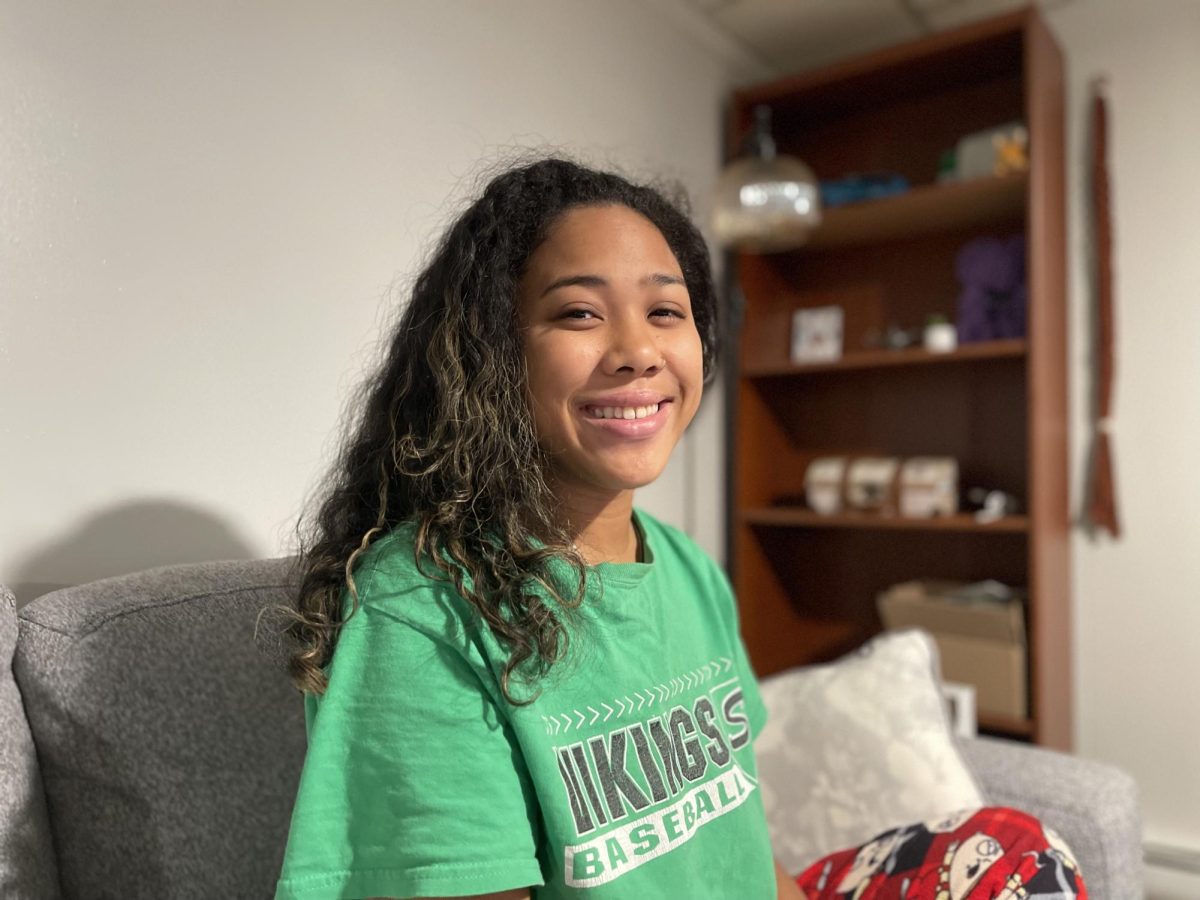
Rozelle Thompson, a SUNY Old Westbury alumnus who earned her degree in a PEL and now attends graduate school at Stony Brook University, is not undocumented, but has compassion for those who are living in fear.
“I used to love the city, now I can’t even think about going after what happened to Chinatown,” she said.
Thompson said faculty members at Stony Brook University are encouraging students to connect current events to their coursework, bridging theory with reality. The timing, she said, has made that effort both necessary and difficult.
The story unfolding at SUNY Old Westbury and nearby universities reflects a larger national pattern: when trust in government wavers, students, especially those studying politics and law, can be among the first to feel it. The students’ reactions can offer a glimpse into how young people interpret civic responsibility and public accountability in times of crisis.
At Old Westbury, many students come from immigrant and mixed-status families. For them, the recent ICE raids are not abstract headlines but reminders of vulnerability. For others, they can represent a moment to reconsider what justice and equity mean in practice.
The experiences of these students show that the effects of national enforcement policies extend far beyond the communities directly targeted. They reach into classrooms, challenge ideals and shape the perspectives of future leaders.
“The kids in class don’t know better, they don’t know they are talking about me,” said the SUNY Old Westbury senior who asked not to be named. “It’s exhausting to live being scared like that.”